
Kerala to Keralam: The Story Behind the Name That Was Always There
- Benjamin John

- Feb 27
- 9 min read
A Name Older than the new born State Itself
In 2026, Kerala officially reclaimed its original name: Keralam. This wasn't a renaming, it was a homecoming. For Malayalam speakers, nothing changed. We've always called our land Keralam. But for the rest of India and the world, the English spelling "Kerala" created a disconnect between how the land was written and how it was spoken.
This change raises fascinating questions: Where did the name Keralam come from? What does it mean? And why did the Constitution use "Kerala" in the first place?
As a Kerala-based tour operator, we at Green Earth Trails have been telling this land's stories for years. The story of its name is as layered as the land itself, woven from ancient trade routes, Sanskrit inscriptions, Tamil poetry, and the everyday language of Malayalis.
Let's explore the history behind a name that has always been here.

Where Did the Name "Keralam" Come From?
There is no single agreed-upon answer. Like many ancient place names, Keralam's origins are debated by historians, linguists, and scholars. Here are the most compelling theories:
From the Chera Kingdom (Cheralam to Keralam)
Some historians connect the name to the ancient Chera dynasty, one of the three major Tamil kingdoms that ruled South India from around 300 BCE to 1200 CE. The Cheras controlled the western coast - the land between the Arabian Sea and the Western Ghats.
The theory suggests Cheralam (the land of the Cheras) gradually evolved into Keralam over centuries of linguistic change. Just as Latin evolved into Romance languages, Dravidian place names shifted with time and usage.
This theory is plausible because early Tamil Sangam poetry (300 BCE - 300 CE) refers to the Chera territories along the western coast, describing monsoon-drenched mountains, lush forests, and bustling pepper ports.
The Landscape Etymology (Kera + Alam = Land of Coconuts)
This is the explanation many of us grew up with, and the one we often share with travellers visiting Kerala.
Kera = Coconut (in Malayalam) Alam = Land
Keralam = Land of Coconuts
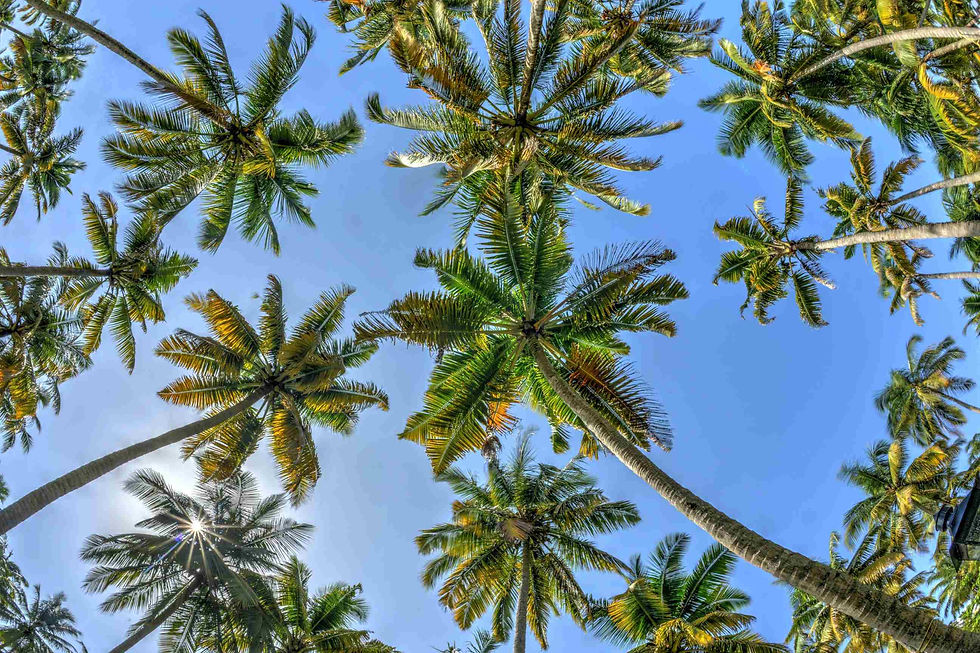
It's beautifully simple and makes intuitive sense. Coconut palms define Kerala's landscape. They line the backwaters, shade the beaches, tower over villages, and provide food, oil, fiber, and thatch. The coconut tree is called Kalpavriksha (the wish-fulfilling tree) in Kerala because every part serves a purpose.
But linguists caution that folk etymologies, explanations that sound logical but lack historical evidence, often emerge after a name is already established. The coconut connection may be accurate, or it may be a later interpretation that stuck because it fit the land so perfectly.
Ancient References - Keralaputra in Ashoka's Edicts
Perhaps the oldest written reference to this region comes from the 3rd century BCE, carved into rock by Emperor Ashoka.
After the brutal Kalinga War, Ashoka embraced Buddhism and renounced conquest. In his Rock Edict XIII, he lists the southern kingdoms beyond the Mauryan Empire's reach, kingdoms he would not invade but hoped to influence through dharma (righteous governance).
Among these powers, he mentions:
Cholas
Pandyas
Satiyaputras
Keralaputras
Keralaputra is widely interpreted as referring to the Chera ruling lineage of the western coast. The suffix -putra means "sons of" or "descendants of," suggesting "sons of Kerala" or "Kerala's rulers."
Importantly, this doesn't mean a state called "Kerala" existed in Ashoka's time. It more likely refers to a people or a region associated with trade, monsoons, and the Malabar Coast.
The fact that this term appears 2,300 years ago tells us something crucial: The name Kerala/Keralam is ancient, predating modern political boundaries by millennia.
From Keralaputra to Keralam: How Language Evolved
So how did Keralaputra (3rd century BCE) become Keralam (modern Malayalam)?
Linguists suggest the root Kerala- remained stable across centuries while surrounding words evolved. Tamil Sangam poetry (300 BCE - 300 CE) describes the Chera kingdom's western territories as:
A land of mountains and monsoons
Rich in pepper, cardamom, and spices
Home to thriving port cities trading with Arabia, Rome, and Southeast Asia
These early Tamil poems don't use "Keralam" directly, but they describe the geography and culture that would come to define it: the Western Ghats, the monsoon rains, the Malabar Coast, and the spice trade.
As Malayalam emerged as a distinct language from Tamil (around 9th-13th centuries CE), the term Keralam became the standard Malayalam word for this land. It was never imposed from outside, it grew organically from the people who lived here.
Before Keralam Became a State: A Land Shaped by Global Trade
Long before modern borders, the Malabar Coast was part of a global economy. This wasn't an isolated corner of India, it was a crucial node in ancient maritime trade networks.
The Spice Trade: Kerala's Global Connection
Kerala's spices, black pepper, cardamom, cinnamon, ginger - were so valuable that they drew traders from across the known world:
Roman ships sailed from the Mediterranean to Muziris (near modern Kochi), bringing gold coins and returning with pepper worth its weight in gold.
Arab traders established permanent settlements along the coast, bringing Islam to Kerala as early as the 7th century CE.
Chinese merchants arrived seeking spices, sandalwood, and medicinal herbs.
Jewish communities settled in Cochin, with traditions claiming roots as far back as King Solomon's time.
The Periplus of the Erythraean Sea (1st century CE), a Greek maritime guide, describes Muziris as one of the most important ports in the Indian Ocean trade network. Ships from Egypt, Arabia, and the Mediterranean regularly docked here, making Kerala a cosmopolitan crossroads centuries before globalization.
This trade wealth didn't just bring goods, it brought ideas, religions, and cultures that shaped Kerala's unique identity.
Religious and Cultural Diversity: A Land of Confluence
Kerala's openness to global trade made it a haven for diverse faiths and philosophies:
Buddhism and Jainism flourished alongside indigenous traditions in the early centuries CE. Archaeological evidence shows Buddhist monasteries and Jain temples across the region.
Christianity arrived early, tradition holds that St. Thomas the Apostle landed in Kerala in 52 CE, establishing one of the world's oldest Christian communities outside the Middle East.
Judaism took root in coastal towns like Cochin, where Jewish traders settled and built synagogues that still stand today.
Islam came through Arab traders in the 7th-8th centuries, establishing Kerala's Mappila Muslim community.
Hinduism evolved distinctively here, with temples becoming centers of social, cultural, and economic life. Temple festivals, classical arts (Kathakali, Mohiniyattam), and Ayurveda became deeply woven into Keralam's identity.
This wasn't a "melting pot" where differences dissolved, it was more like a mosaic, where communities maintained distinct identities while coexisting peacefully. Kerala's famed social harmony (however imperfect) has roots in centuries of trade-driven tolerance.
Why the Constitution Called It "Kerala" Instead of "Keralam"
When India reorganized states along linguistic lines in 1956, Malayalam speakers finally got a unified state. But the official English name became "Kerala" not "Keralam." Why?
The Colonial Spelling Legacy
During British colonial rule, English spellings of Indian place names were often phonetic approximations by British administrators who didn't speak local languages fluently.
Keralam → Written as "Kerala" in English records
Mumbai → Called "Bombay"
Chennai → Called "Madras"
Kolkata → Called "Calcutta"
Bengaluru → Called "Bangalore"
These anglicised spellings became standard in official documents, maps, and eventually the Constitution of India.
When the States Reorganisation Act of 1956 created the state of Kerala (merging Travancore, Cochin, and Malabar regions), the framers used the existing English spelling from colonial records: Kerala.
Malayalam speakers, of course, continued calling it Keralam, just as they always had. The disconnect was only in English. The 2026 Change: Returning to Lived Language
The recent official change simply aligns the English spelling with the Malayalam pronunciation. It's not a political statement or cultural nationalism, it's linguistic accuracy.
Other Indian states have made similar changes:
Bombay → Mumbai (1995)
Madras → Chennai (1996)
Calcutta → Kolkata (2001)
Bangalore → Bengaluru (2014)
Kerala's shift to Keralam follows this pattern: bringing official names closer to how people actually speak.
For travellers, tour operators, and anyone writing about this land, "Keralam" is now the preferred spelling, though both remain understood globally during the transition.
The Identity Question: Keralites, Keralamites, or Malayalis?
Here's where it gets interesting. Even with the official name change, most people here don't call themselves "Keralites" or "Keralamites."
We call ourselves Malayalis (മലയാളി).
What Does "Malayali" Mean?
The word Malayali comes from:
Mala = Mountain (referring to the Western Ghats)Alam = LandMalayali = People of the mountain land
Unlike "Kerala" or "Keralam" (which names the place), Malayali names the people, defined not by borders but by language, culture, and shared identity.
You can be a Malayali living in Dubai, Toronto, or New York. The term travels beyond geography because it's rooted in who you are, not just where you're from.
Language as Identity
Malayalam is what binds Malayalis together. It's not just a communication tool, it's a cultural archive. Malayalam literature, cinema, music, and humor shape a distinct worldview.
When someone asks, "Where are you from?" a person from this land might say:
"I'm from Keralam" (naming the place)
"I'm a Malayali" (naming the identity)
Both are correct. Both matter. But Malayali carries deeper cultural weight because it transcends borders and connects diaspora communities worldwide.
What This Means for Travellers: Why Names Matter
You might wonder: Does this name change affect your Kerala trip?
Not practically, the backwaters, tea plantations, and beaches haven't moved. But understanding the name deepens your experience.
Travel Beyond the Surface
When you know that Keralam means "land of coconuts," you notice the coconut economy everywhere:
Coir factories processing coconut fibre into rope
Toddy tappers climbing palms at dawn
Coconut oil lamps in temples
Every meal served on a banana leaf with coconut chutney
When you understand Muziris was a Roman-era port, Fort Kochi's Chinese fishing nets, Portuguese churches, Dutch palaces, and Jewish synagogues make sense, this land has always welcomed the world.
When you learn Malayali identity centers on language and culture, you see why Kerala has India's highest literacy rate, a thriving film industry, and intense pride in classical arts.
Respectful Travel Starts with Language
At Green Earth Trails, we encourage travellers to:
Say "Keralam" (not "Keral-UH")
Learn basic Malayalam greetings: Namaskaram (hello), Nanni (thank you)
Ask your guide about local traditions, not just tourist sights
Support local artisans, homestays, and community-run experiences
Names carry history. Using them correctly is a small act of respect that transforms tourism into cultural exchange.
The Bigger Picture: History Doesn't Change, It Returns to Its Own Pronunciation
The Kerala-to-Keralam shift reminds us that official names are recent inventions, but the land and its people are ancient.
Keralam didn't start in 1956 when the state was formed. It existed in:
Ashoka's edicts (3rd century BCE)
Sangam poetry (300 BCE - 300 CE)
Roman trade records (1st century CE)
Oral traditions passed down through generations
The Constitution formalised a state. The name change simply corrects a colonial-era spelling.
Sometimes history doesn't change, it just returns to its own pronunciation.
Frequently Asked Questions: Kerala to Keralam
When did Kerala officially become Keralam?
The name change was formalised in 2026, though Malayalam speakers have always called the state Keralam.
What does Keralam mean?
The most common interpretation is "land of coconuts" (Kera = coconut, Alam = land), though some historians link it to the ancient Chera kingdom or the term Keralaputra from Ashoka's edicts.
Will maps and websites change to "Keralam"?
Yes, gradually. Official government documents, maps, and signage will transition to "Keralam." International usage will take time, similar to Mumbai/Bombay or Chennai/Madras.
Should I say "Kerala" or "Keralam" when traveling there?
Keralam is now the official and preferred term. Locals will appreciate your effort to use the correct pronunciation, though "Kerala" is still widely understood during the transition.
Are people from Keralam called "Keralamites"?
No. The preferred term is Malayalis, which refers to Malayalam-speaking people regardless of where they live.
Does this change affect tourist visas or travel documents?
No. Tourist visas are issued for "India," not specific states. The name change is administrative and doesn't affect travel logistics.
What about existing bookings with "Kerala" in the itinerary?
All bookings, tours, and services remain valid. Tour operators (like us!) are simply updating materials to reflect "Keralam" in new bookings.
Is this a political or cultural movement?
It's a linguistic correction, similar to Mumbai, Chennai, and Bengaluru. The goal is to align English spellings with actual pronunciation, not a political statement.
Traveling Keralam with Green Earth Trails: Stories That Go Deeper
At Green Earth Trails, we've always believed that the best travel goes beyond sightseeing - it connects you to stories.
The story of Keralam's name is just one thread in a rich tapestry:
The spice trade routes that shaped world history
The Syrian Christian community's 2,000-year heritage
The Jewish quarter in Fort Kochi
The Mappila Muslim culture of North Malabar
The coconut economy that sustains village life
The monsoon rhythms that dictate planting and harvest
When you travel with us, we don't just show you where, we show you why. Why the backwaters exist (ancient flood management). Why tea grows in Munnar (British plantations). Why Fort Kochi looks European (colonial trade history).
Understanding "Keralam" is part of that deeper journey.
Conclusion: A Name That Was Always Here
Kerala didn't become Keralam in 2026. Keralam was always the name, spoken by millions, rooted in ancient references, carried across centuries.
The official change simply brings the written word in line with the spoken one. It corrects a colonial-era spelling and honors the language of the people who have called this land home for millennia.
For travellers, this is an invitation: Learn the name. Learn its meaning. Let it guide you deeper into a land where coconut palms sway over backwaters, where spice-scented mountains meet the Arabian Sea, and where history doesn't change, it just returns to its own pronunciation.
Keralam. Say it with us. It's been waiting to be pronounced correctly for 70 years.
Ready to explore Keralam? Browse our Kerala tour packages or contact us to plan your journey.
Comments